We Make the Invisible Visible
We change what the system sees, measures, and values — disaggregating data, listening to the people it serves, and shifting focus from compliance to whether lives are getting better.
Whether we live in Alabama or Connecticut, Tulsa or the Bay Area, we all want the same things: safe neighborhoods, good schools, affordable child care, and the opportunity to build a better life. Our government is the most powerful force we have to make that happen. It is the single largest investment we make in our collective well-being.
We are building a government that listens, learns, and delivers.
But it is failing to deliver. Not because civil servants don't care, or well-intentioned programs don’t exist, but because the systems they operate within are limited in scope and hampered by design.
Our current systems were built to track compliance, not improve lives; they are fragmented across agencies that were never set up to work together; and they are disconnected from the people they exist to serve.
But our government can change — and we know how.
We work alongside government, philanthropy, community organizations, and the people they serve to align data, funding, and decisionmaking around what actually improves lives, and we embed the accountability and culture that make those improvements endure.
The result is a future in which agencies share data so that a family doesn't have to tell their story five times. Where community members have real power to shape how services are designed and delivered. Where civil servants are measured on outcomes, not compliance — and spend their days doing the work they were trained to do.
It is a government that has rebuilt its relationship with the people it serves. One where trust isn't assumed; it's earned, through responsive services, shared accountability, and results people can see in their own lives.
We align our work and seek to achieve impact on three life outcomes:
The enabling conditions for people to thrive
The behavioral conditions and support needed to sustain stability and achieve mobility
The measurable advancements in income, wealth, and education that lead to sustained prosperity
We aim for everyone, no matter their race, background, or circumstances, to achieve and maintain stability, care for their well-being, and attain greater economic mobility through our work with public systems.
In our public systems, no one is responsible for making the pieces work together. Agencies operate in silos. Data doesn't cross departmental lines. Community insights are collected but rarely shape decisions. And no one is accountable for whether the system as a whole is actually improving lives.
Third Sector fills that role. We don't deliver a playbook and leave. We don't design a program in one place and replicate it everywhere. We connect what our government has fragmented — bringing together the agencies, civil servants, communities, and providers to build the coordination, the accountability, and the culture that make our government work for the people it serves.
Three fundamental shifts drive this transformation:
We change what the system sees, measures, and values — disaggregating data, listening to the people it serves, and shifting focus from compliance to whether lives are getting better.
We shift who holds power and how decisions get made — building participatory governance that gives constituents, providers, and community leaders real authority.
We change the operating architecture itself — redesigning contracts so funding follows outcomes, aligning agencies, and embedding continuous improvement into culture and infrastructure.
Our work is grounded in FSG’s Water of Systems Change, which acknowledges that sustainable change and outcomes happen only when solutions shift the relationships, power dynamics, and mindsets that sit below the structural level of the policy, funding, and programs that those who are ultimately responsible for implementing a particular change are working on.
Improving our public systems requires more than better programs or technology. It requires rebuilding the foundation itself — the relationships, the accountability structures, and the culture that make government actually work for people.
Our work is structured around four service offerings — the specific mechanisms through which we help public systems and their partners move the six levers of outcomes-focused government.

We bridge the gap between policy intent and people's actual experience. Most policy failures are not failures of ideas — they are failures of implementation. We work alongside agencies to translate policy into operational practice: building the internal government capacity, data systems, and management culture within the civil service needed to deliver on what the policy promises.
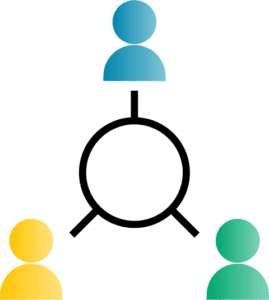
We convene and structure the collaborations that no single actor can build alone. Government agencies, philanthropy, service providers, and communities each have a distinct role in changing how systems serve people, but they rarely operate as an integrated whole. We build the tables, structures, and shared commitments that make true cross-sector coordination possible and durable.
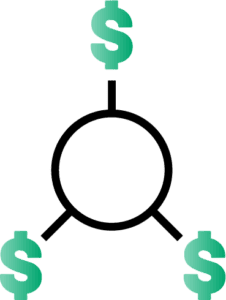
We restructure how public dollars are deployed so that government funding flows toward what works to improve lives, not just services. We work with agencies and their partners to redesign contracts, procurement processes, and funding formulas so that success is measured in outcomes for people, not dollars spent or activities completed.
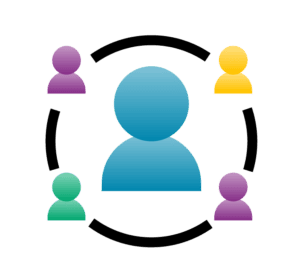
We redesign who holds power in public systems, shifting decisionmaking authority so that the people most affected by government programs have genuine influence over how those programs are designed, funded, and evaluated. This is not community engagement as box-checking. It is a structural change in how decisions are made to ensure our public systems deliver meaningful results for their communities.